
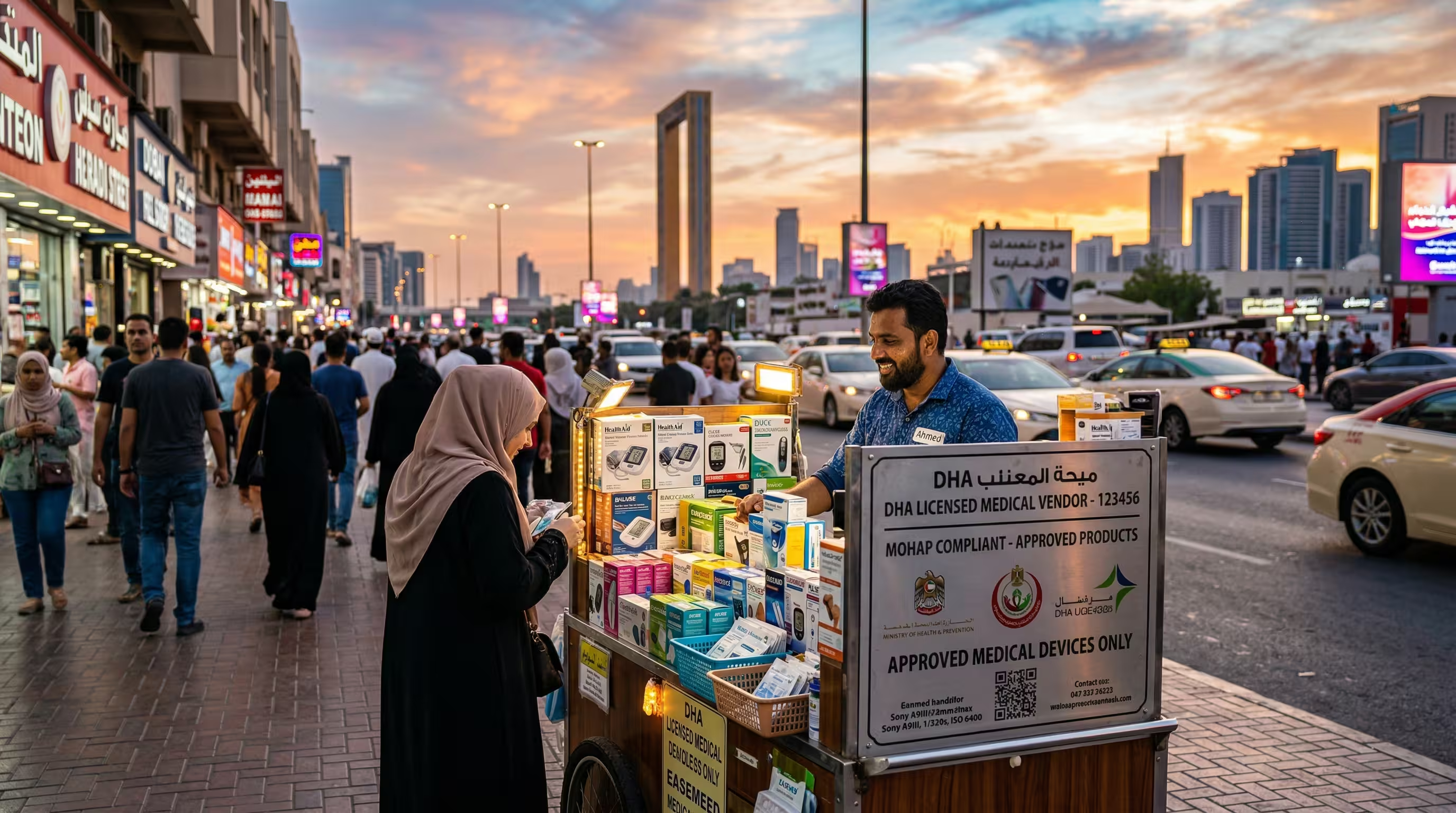

Dubai has rapidly positioned itself as a global hub for healthcare innovation and medical technology. However, entering the UAE healthcare market requires strict adherence to regulatory standards. Many businesses face challenges during the approval stage due to errors that lead to rejection.
Medical device registration in Dubai is a mandatory process regulated by the Ministry of Health and Prevention (MOHAP). To successfully register medical devices in UAE, companies must ensure full compliance with documentation, classification, and safety requirements.
Even small mistakes can delay approvals or result in rejection. Understanding the common reasons behind rejection can help businesses avoid costly setbacks and achieve faster approvals.
What is Medical Device Registration in UAE?
The UAE medical device registration process ensures that all healthcare products meet strict safety, quality, and performance standards before entering the market.
To obtain medical device approval in UAE, companies must submit detailed applications, technical documentation, and compliance certifications through MOHAP. This process ensures that only safe and approved devices are available to patients and healthcare providers.
Learn more about the complete medical device registration in Dubai process to ensure compliance from the start.
Why Medical Device Applications Get Rejected in Dubai
The medical device approval UAE process is highly regulated and carefully reviewed by authorities. Every application is evaluated to ensure compliance with UAE healthcare laws.
Rejections typically occur due to:
- Incomplete documentation
- Incorrect device classification
- Missing certifications
- Non-compliance with labeling standards
- Failure to meet regulatory requirements
Understanding these issues can significantly improve your chances of approval.
Top Reasons for Medical Device Registration Rejection in Dubai
1. Incomplete or Incorrect Documentation
Incomplete documentation is one of the most common causes of rejection.
- Missing technical files
- Incorrect product information
- Incomplete application forms
Authorities rely on documentation as part of the medical device approval UAE process, and even minor errors can lead to rejection.
Proper documentation is also essential for product registration Dubai, ensuring regulatory approval for healthcare products.
2. Incorrect Medical Device Classification
Devices must be correctly classified based on risk level.
- Selecting the wrong classification category
- Misinterpreting regulatory guidelines
Incorrect classification leads to mismatched requirements and delays in the UAE medical device registration process.
3. Missing or Invalid ISO 13485 Certification
ISO 13485 certification is mandatory for demonstrating quality compliance.
- Expired certificates
- Missing documentation
- Non-compliance with standards
Manufacturers must ensure proper ISO certification in Dubai to meet medical device compliance UAE requirements.
4. No Local Authorized Representative (LAR)
Foreign manufacturers must appoint a Local Authorized Representative.
- No LAR assigned
- Incorrect authorization documents
- Unverified representative
Without an LAR, the application cannot proceed through the medical device registration process in Dubai.
5. Non-Compliant Labeling and Packaging
Labeling must meet strict UAE healthcare regulations.
- Missing instructions
- Incorrect product labeling
- Lack of safety warnings
Improper labeling can result in immediate rejection due to safety concerns.
6. Insufficient Technical Documentation
Technical documentation is critical for product evaluation.
- Missing safety reports
- Lack of performance data
- Incomplete clinical information
Authorities require detailed documentation to ensure compliance with UAE medical device approval standards.
7. Failure to Meet MOHAP Requirements
The MOHAP medical device registration process involves strict guidelines.
- Incorrect submission procedures
- Missing required approvals
- Failure to follow regulatory steps
Understanding MOHAP requirements is essential for successful approval.
8. Free Sale Certificate Issues
The Free Sale Certificate verifies product approval in its origin country.
- Missing certificate
- Expired FSC
- Unverified documentation
This document plays a key role in the medical device approval UAE process.
9. Delayed Responses to Authorities
Timely communication is critical during the review process.
- Late responses to queries
- Missed deadlines
- Incomplete resubmissions
Delays can lead to rejection or extended approval timelines.
10. Lack of Regulatory Knowledge
Many businesses fail due to lack of understanding of UAE regulations.
- Misinterpreting requirements
- Incorrect documentation
- No expert guidance
This often results in avoidable rejection during the UAE medical device registration process.
How to Avoid Medical Device Registration Rejection
To improve approval success:
- Prepare complete and accurate documentation
- Ensure correct device classification
- Maintain valid certifications
- Follow MOHAP guidelines strictly
- Verify labeling compliance
- Appoint a Local Authorized Representative
- Work with regulatory experts
Following proper medical device compliance UAE guidelines helps reduce risks and improve approval chances.
What to Do If Your Application Gets Rejected
If your application is rejected:
- Identify the rejection reason
- Correct documentation errors
- Update compliance requirements
- Resubmit the application
With proper corrections, businesses can successfully obtain approval.
Why Professional Assistance Matters
The medical device registration process in Dubai is complex and requires technical expertise.
Working with professionals helps:
- Avoid common mistakes
- Speed up approvals
- Ensure full compliance
- Improve efficiency
Why Choose Takween Advisory
From company formation in Dubai to regulatory approvals, our team offers complete end-to-end support. Businesses can also explore the differences between freezone vs mainland Dubai to choose the right setup for their needs.
We specialize in handling the entire medical device registration process in Dubai, ensuring compliance, accuracy, and faster approvals. Our experience with MOHAP procedures allows us to minimize risks and streamline the process.
Partner with Takween Advisory for reliable, efficient, and professional support.
Start Your Medical Device Registration Process with Confidence
Avoiding rejection starts with proper preparation and expert guidance. Understanding the challenges and addressing them proactively can significantly improve your success rate.
At Takween Advisory, we help businesses successfully register medical devices in UAE, ensuring smooth approvals and full regulatory compliance.
Get expert support today and simplify your medical device approval journey.