
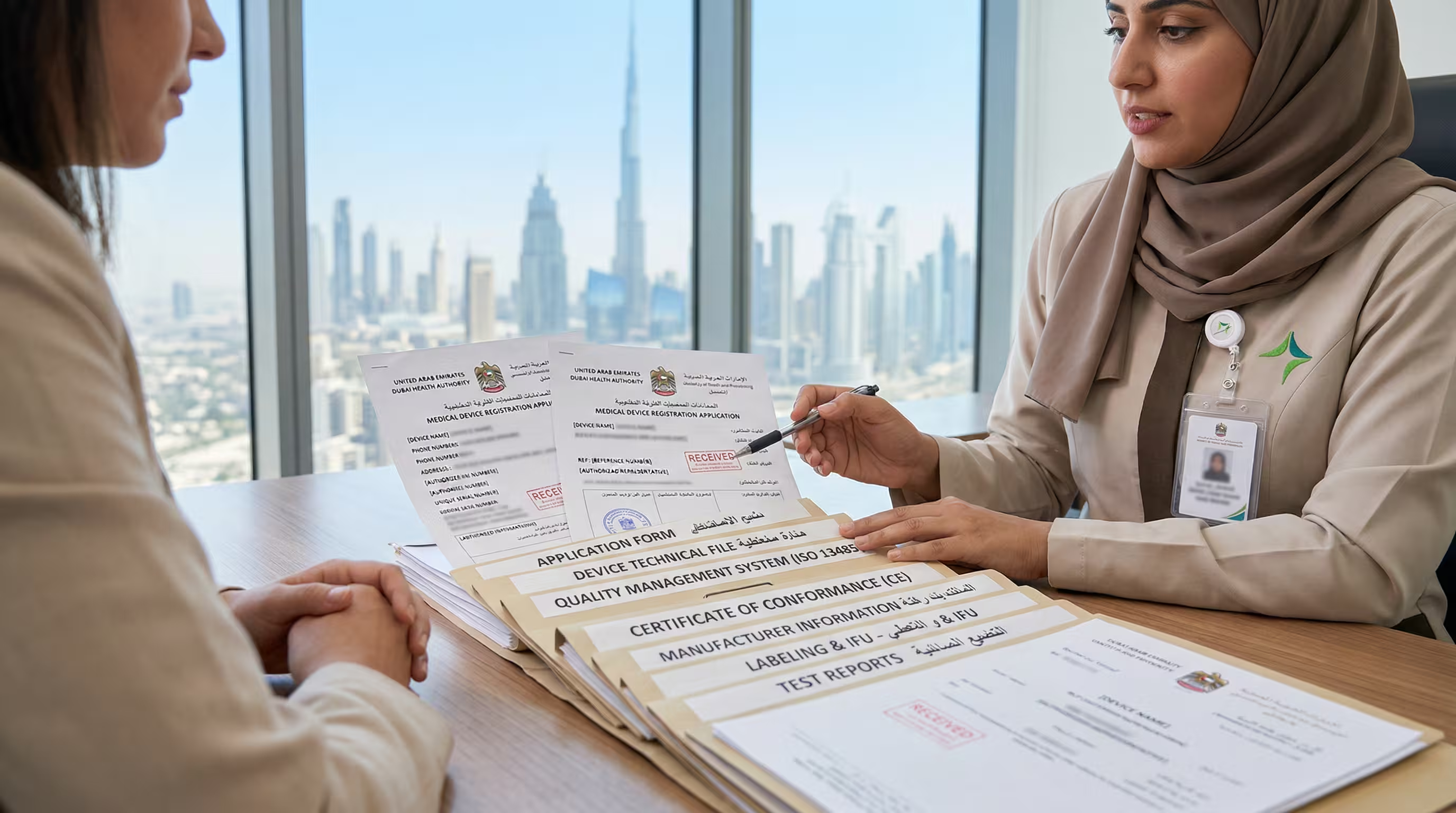

Dubai has become a leading destination for healthcare investment and medical technology businesses. With strict regulatory standards in place, companies must ensure full compliance before entering the UAE market. One of the most critical steps is preparing the correct documentation for approval.
Medical device registration in Dubai is a mandatory regulatory process that ensures all healthcare products meet safety, quality, and performance standards before being introduced into the market. Without proper documentation, businesses may face delays, rejections, or extended approval timelines.
This comprehensive guide outlines the complete checklist of documents required for medical device approval in the UAE, helping you streamline your application and achieve faster approvals.
What is Medical Device Registration in Dubai?
Medical device registration is the official approval process required to register medical devices in the UAE before they can be imported, distributed, or sold. This process is regulated by the Ministry of Health and Prevention (MOHAP), which ensures that all products comply with UAE healthcare regulations.
The UAE medical device registration process evaluates product safety, manufacturing standards, and clinical performance. Only devices that meet these requirements are granted approval for market entry.
Why Documentation is Crucial for Medical Device Approval in UAE
Proper documentation is the foundation of the approval process. It is also essential for product registration in Dubai, ensuring that healthcare products meet regulatory requirements before entering the UAE market.
- Product safety and risk classification
- Manufacturing quality and compliance standards
- Clinical performance and effectiveness
- Adherence to international regulations
Incomplete or inaccurate documentation is one of the most common reasons applications fail. Preparing documents correctly ensures smooth approval and avoids unnecessary delays.
Complete Checklist of Documents Required for Medical Device Approval UAE
To successfully complete the medical device compliance process in the UAE, businesses must prepare the following documents:
1. Company Legal Documents
These documents confirm your company’s legal status and eligibility to operate.
- Valid trade license
- Certificate of incorporation
- Memorandum of Association (MOA)
- Passport copies of shareholders
- UAE visa copies (if applicable)
These documents establish your business identity and allow you to proceed with regulatory approvals.
2. Local Authorized Representative (LAR) Documents
Foreign manufacturers must appoint a Local Authorized Representative (LAR) to handle regulatory communication.
- Authorization letter from manufacturer
- LAR agreement
- LAR trade license copy
- Contact details
The LAR acts as a bridge between your company and UAE regulatory authorities.
3. Manufacturer Compliance Documents
These documents verify that the manufacturer follows international standards.
- Manufacturer license
- ISO 13485 certification
- Quality management system documents
- Manufacturing site details
These are essential to demonstrate medical device compliance in the UAE.
4. Free Sale Certificate (FSC)
The Free Sale Certificate confirms that the product is legally sold in its country of origin.
- Builds product credibility
- Speeds up approval process
- Supports regulatory acceptance
This document is critical for medical device approval in UAE.
5. Product Technical Documentation
This is the most detailed part of the application.
- Product specifications and description
- Design and manufacturing details
- Risk analysis reports
- Safety and performance data
- Clinical evaluation reports (if required)
Authorities use this to evaluate whether the product meets UAE standards.
6. Product Classification Details
Devices must be classified based on risk level under the UAE medical device registration process.
- Class I – Low Risk
- Class II – Medium Risk
- Class III – Medium to High Risk
- Class IV – High Risk
Correct classification is crucial for determining documentation and approval requirements.
7. Labeling and Packaging Compliance
Proper labeling ensures safe usage and regulatory compliance.
- Product name
- Manufacturer details
- Instructions for use
- Warnings and precautions
- Batch/serial numbers
Labeling must meet UAE healthcare product regulations.
8. Declaration of Conformity
This document confirms that the product complies with regulatory standards.
- Manufacturer declaration
- Compliance with international standards
- Regulatory references
It serves as a legal assurance of product safety.
9. Clinical Data (For High-Risk Devices)
High-risk devices require additional clinical validation.
- Clinical trial data
- Performance evaluation reports
- Safety testing results
This ensures the product is safe for real-world use.
10. MOHAP Application Submission
All documents must be submitted through the MOHAP portal.
- Completed application form
- Supporting documentation
- Payment of applicable fees
Accuracy is critical to avoid rejection.
Common Mistakes to Avoid in Documentation
Many businesses face delays due to simple errors. Avoid:
- Missing or incomplete documents
- Incorrect product classification
- Lack of ISO certification
- Improper labeling
- No Local Authorized Representative
Avoiding these mistakes improves your chances of successful medical device approval in UAE.
How to Prepare Documents Efficiently
To ensure smooth approval:
- Organize documents in advance
- Double-check all details
- Follow MOHAP guidelines
- Work with regulatory experts
Proper preparation helps accelerate the UAE medical device approval process.
Timeline for Document Verification and Approval
The timeline depends on device classification:
- Class I: 4–8 weeks
- Class II–IV: 6–12 weeks
Incomplete documentation can significantly delay approvals.
Why Choose Takween Advisory
At Takween Advisory, we understand that setting up a medical device business in Dubai involves complex regulatory procedures, strict compliance requirements, and detailed documentation. Our team of experts provides end-to-end support-from business setup and licensing to medical device approval and regulatory compliance-ensuring a smooth and hassle-free experience.
With in-depth knowledge of UAE regulations and strong expertise in handling MOHAP approvals, we help businesses avoid delays, reduce risks, and achieve faster market entry. Our client-focused approach, transparent process, and commitment to excellence make us a trusted partner for entrepreneurs and companies looking to establish and grow in Dubai’s healthcare sector.
Choose Takween Advisory for reliable guidance, efficient processing, and complete support at every stage of your business journey.
Start Your Medical Device Registration Process with Confidence
Preparing accurate documentation is essential for successful approval. Every requirement-from legal documents to technical data-must be handled with precision.
At Takween Advisory, we provide complete support for businesses looking to register medical devices in UAE, ensuring a smooth and compliant process from start to finish.
Businesses planning to enter the UAE healthcare sector should consider complete business setup in Dubai to ensure smooth operations and full regulatory compliance.