
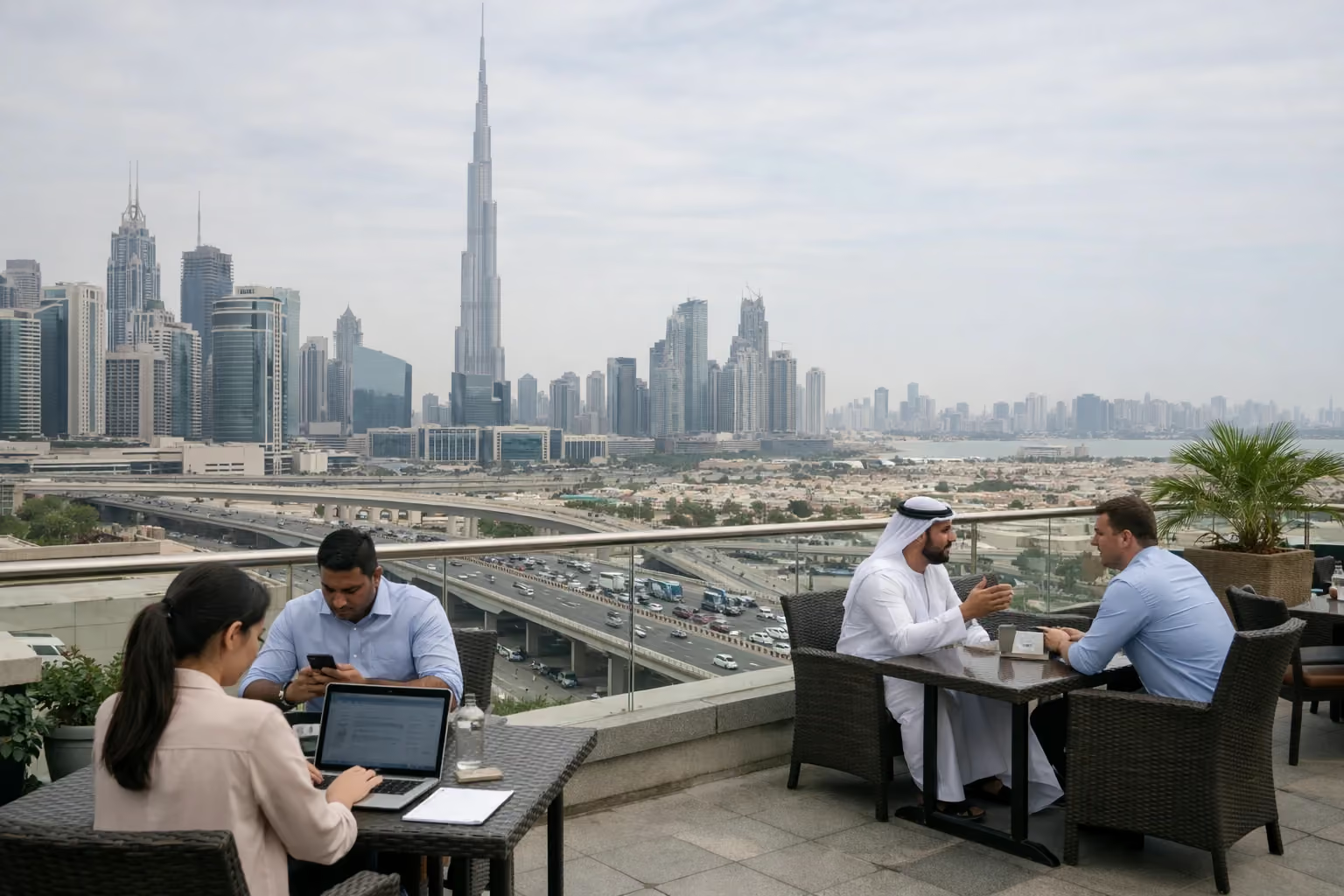

Sharjah is consistently the cheaper emirate to set up and operate in, sometimes by a wide margin - but the savings come with a real trade-off that's worth weighing honestly rather than glossing over. We've compared individual free zones across emirates in our DMCC vs IFZA vs SHAMS comparison and covered real Dubai license costs across a dozen industries in our true cost of starting a business guide; this guide looks at the two emirates side by side - mainland, free zones, office rent, and the commute that comes with choosing the cheaper option.
Dubai vs Sharjah: Side-by-Side Comparison
| Factor | Dubai | Sharjah |
|---|---|---|
| Mainland license cost | AED 15,000 - 25,000 | AED 12,000 - 20,000 |
| Cheapest free zone entry | AED 11,900+ (IFZA) | AED 5,500 - 9,000 (SHAMS, zero-visa) |
| Prime office rent | Baseline | 50-60% lower than comparable Dubai locations |
| Foreign ownership | Up to 100% | Up to 100% |
| Corporate tax | 9% above AED 375,000 (federal) | 9% above AED 375,000 (federal - identical) |
| Peak commute (Sharjah to central Dubai) | N/A | 45-55 minutes |
Mainland Setup: SEDD vs DET
Sharjah mainland companies register through the Sharjah Economic Development Department (SEDD), with basic trade license fees typically running AED 12,000 to AED 20,000 - generally somewhat lower than Dubai's Department of Economy and Tourism (DET) range of AED 15,000 to AED 25,000, though the gap on mainland licensing specifically is narrower than the free zone comparison below. Both emirates now permit up to 100% foreign ownership for most commercial and industrial activities, and both follow the same five-step formation sequence - trade name reservation, initial approval, MOA drafting, office lease registration, and final license issuance. A Local Service Agent may still be required for certain professional activities in either emirate, holding no equity stake either way.
Free Zone Options in Each Emirate
Sharjah runs several free zones worth knowing individually rather than treating as one option:
- SHAMS (Sharjah Media City) — the most budget-friendly entry point, with all-inclusive virtual office packages from roughly AED 9,000 to AED 15,000 for the first year, covering media, consulting, technology, and e-commerce activities among 1,500+ permitted activities.
- SAIF Zone (Sharjah Airport International Free Zone) — geared toward trading, logistics, and light manufacturing, with flexi-desk trading licenses from around AED 12,000 and warehouse or office-inclusive packages starting near AED 25,000.
- Hamriyah Free Zone (HFZA) — focused on heavy industry, manufacturing, energy, and deep-water maritime operations - the natural fit for industrial activity that doesn't suit a media or trading-oriented zone.
- SRTIP (Sharjah Research Technology and Innovation Park) — positioned around R&D, technology, and innovation-driven businesses, distinct from the more general-purpose zones above.
Dubai's free zone landscape is considerably larger and more varied - DMCC, IFZA, Meydan, DAFZA, JAFZA, and others each carve out different activity and cost niches, which we've broken down individually elsewhere on the blog. The practical difference isn't that Dubai lacks affordable options - IFZA's entry packages are genuinely competitive - it's that Sharjah's free zones as a category sit consistently lower, particularly once office or warehouse space enters the picture.
Office Rent: The Real Cost Gap
This is where the Dubai-Sharjah difference is most pronounced and best documented. According to Savills Middle East's Q1 2026 Sharjah commercial market report, prime office rents in Sharjah run 50 to 60% lower than comparable Dubai locations, with an overall 30 to 50% cost advantage over both Dubai and Abu Dhabi more broadly. For a business where physical office or warehouse space is a meaningful ongoing cost - as opposed to a virtual or flexi-desk setup where the gap matters much less - this is often the single biggest lever in the entire cost comparison, larger than the difference in license fees themselves.
The Trade-Off: Commute and Location
The honest counterweight to Sharjah's cost advantage is what it costs in time and logistics if your business, clients, or partners are Dubai-centered. Peak-hour commute times between Sharjah and central Dubai business districts run 45 to 55 minutes each way, and toll costs for regular commuters between the emirates typically run AED 400 to 600 monthly, well above the AED 100 to 200 a Dubai-based operation typically pays. None of this is prohibitive - plenty of businesses operate successfully from Sharjah with regular Dubai engagement - but it's a real, recurring cost in time and money that a pure license-fee comparison misses entirely. It matters far less for a business that's genuinely Sharjah-facing or largely remote than for one that expects frequent in-person Dubai meetings.
Corporate Tax and Compliance: No Difference Between Emirates
Worth stating plainly since it's sometimes assumed otherwise: UAE Corporate Tax is a federal law, not an emirate-level one. The 0% rate up to AED 375,000 and 9% above it applies identically whether your company is registered in Dubai or Sharjah, and free zone companies in either emirate can qualify for the 0% Qualifying Free Zone Person regime on qualifying income under the same conditions. Corporate tax isn't a factor in choosing between the two emirates - the cost differences that matter are licensing, office rent, and operational logistics, not federal tax treatment.
Which One Should You Choose?
Physical Office or Warehouse Space Is a Major Cost Driver
Sharjah's 50-60% lower prime office rents make a real difference here - this is where the emirate-level cost gap is largest and most worth prioritizing.
Your Business Is Genuinely Dubai-Facing
If clients, partners, or daily operations are Dubai-centered, the 45-55 minute peak commute is a recurring cost worth weighing against the savings - Dubai may be the more practical choice even at a higher price point.
You're Running a Lean, Virtual-First Setup
With a flexi-desk or virtual office model, the office rent gap barely applies, and SHAMS's entry pricing becomes genuinely hard to beat on pure cost.
Industrial, Manufacturing, or Maritime Activity
Hamriyah Free Zone's industrial focus and deep-water access are worth evaluating specifically - this isn't really a Dubai-vs-Sharjah decision so much as a zone built for a particular activity type.
Why Get Expert Help Choosing Between Dubai and Sharjah
The right emirate depends on how much weight your business puts on office cost versus Dubai proximity, and which specific free zone or mainland structure actually fits your activity - two businesses with similar budgets can land on opposite answers here. Takween Advisory works across both emirates and gives every client a real, itemized comparison before you commit. Book a free consultation to find out which emirate actually fits your business and budget.
Dubai vs Sharjah: Quick Reference Table
Here's a quick-reference summary of every figure covered in this guide.
| Item | Detail |
|---|---|
| Sharjah mainland license cost | AED 12,000 - 20,000 |
| Dubai mainland license cost | AED 15,000 - 25,000 |
| SHAMS entry package (zero-visa) | AED 5,500 - 9,000 |
| SAIF Zone entry package | From ~AED 12,000 |
| Prime office rent gap (Sharjah vs Dubai) | 50-60% lower in Sharjah |
| Overall cost advantage (Sharjah vs Dubai/Abu Dhabi) | 30-50% lower |
| Peak commute (Sharjah to central Dubai) | 45-55 minutes |
| Monthly toll cost (Sharjah-Dubai commuter) | AED 400 - 600 |
| Corporate tax | Identical federal rate - no emirate-level difference |