
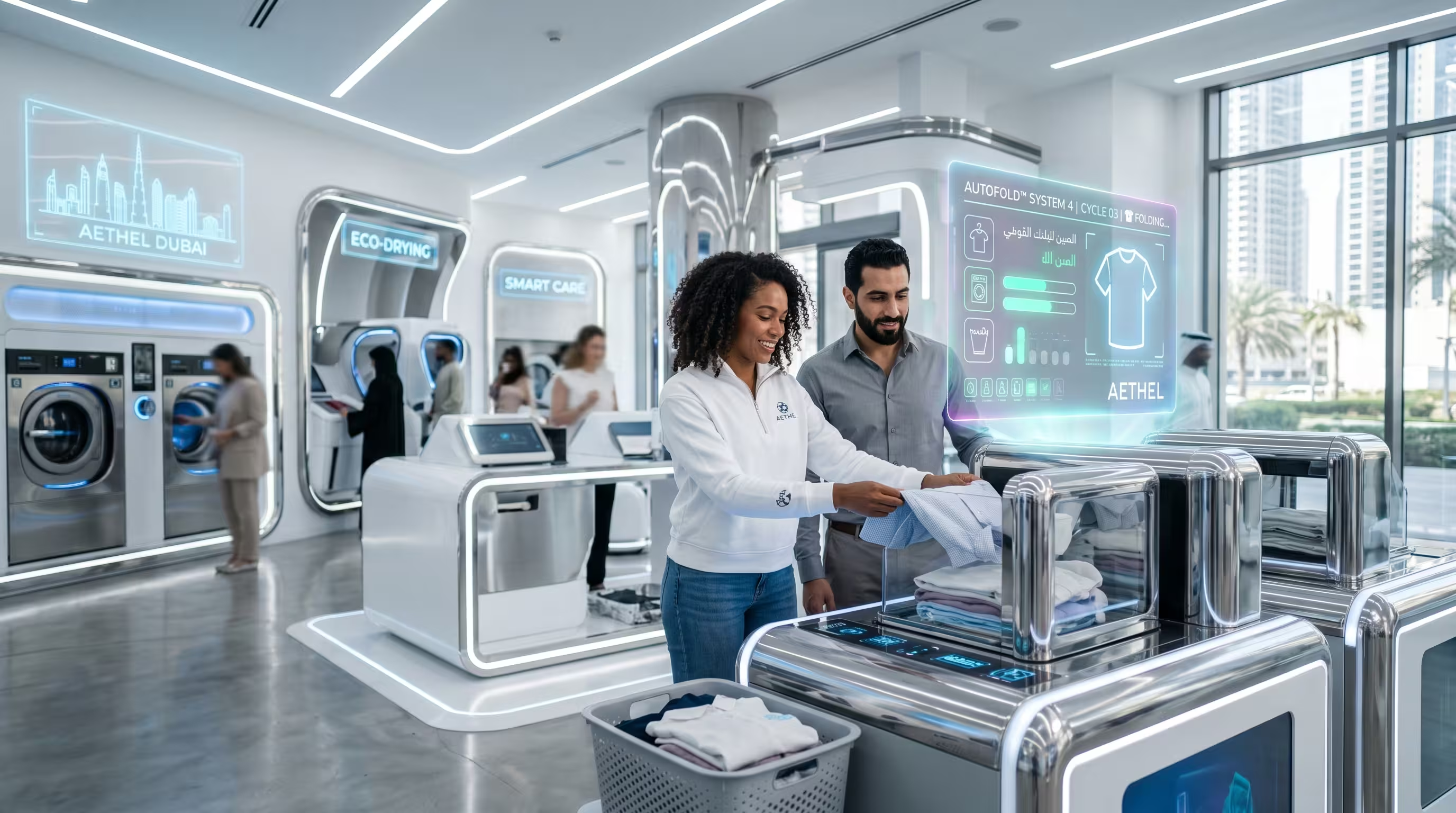

Dubai's laundry industry operates in one of the highest-demand environments for commercial cleaning services in the world. A city of over 3.6 million residents, the majority of whom live in apartments without in-unit laundry facilities, generates consistent daily demand for laundry services across every income bracket. The hospitality sector adds another major layer: Dubai has over 140,000 hotel rooms, and each one generates linen, towel, and uniform cleaning requirements that flow through commercial laundry operations. The market is large, recurring, and largely recession-resistant, making it an attractive entry point for investors who want a service business with predictable volume.
The direct answer to how you start: you need a commercial trade license from the Department of Economy and Tourism (DET) with the appropriate laundry or dry cleaning activity code, plus premises approval from Dubai Municipality's Environment Health and Safety department. The trade license establishes your company's legal existence. The municipality approval certifies that your physical premises meet the health, safety, and environmental standards required to handle and process laundry commercially. Both are mandatory before you accept a single customer.
This guide walks through every stage of the process, from deciding your business model and jurisdiction to equipment, staffing, and the mistakes that most commonly delay new laundry operators from opening.
Why Dubai's Laundry Market Is a Strong Business Opportunity
Several structural factors make laundry services in Dubai more commercially durable than in many other markets. The city's apartment-dominant residential landscape means the vast majority of residents cannot do their laundry at home the way residents of villa communities or suburban markets in other countries can. For working professionals, families managing multiple children's school uniforms, and the large population of single expatriate workers, outsourcing laundry is a practical necessity rather than a luxury.
The corporate and hospitality sectors represent a separate and highly lucrative stream. Hotels, restaurants, spas, clinics, and gyms all generate ongoing linen and uniform cleaning requirements that are contracted out to commercial laundry operators. Long-term contracts with institutional clients offer revenue predictability that the retail walk-in model cannot guarantee on its own, and a well-positioned laundry business can layer both streams for optimal cash flow stability.
Dubai's legal environment has also improved for new laundry business owners. The 2021 ownership reforms mean foreign investors can hold 100% of a mainland laundry business without needing an Emirati partner, removing a barrier that previously complicated entry for international operators.
What Type of Laundry Business Can You Start in Dubai
The laundry sector in Dubai covers several distinct formats, and the one you choose directly affects your licensing path, your capital requirements, and your target customer base.
A retail laundry and dry cleaning shop serves walk-in customers in a fixed location, typically in a residential area or commercial strip. This is the most common format and the most straightforward to license. A self-service laundromat, where customers use coin or card-operated machines themselves, is a growing format in Dubai as real estate pressure pushes more residents into smaller apartments. A pickup and delivery laundry service operates without a customer-facing shopfront, collecting and returning garments from customers' homes or offices. This model requires lower premises investment but needs a transport or courier activity code added to the trade license.
Industrial or commercial laundry serves institutional clients such as hotels, hospitals, airlines, and restaurant chains, operating at significantly larger scale with industrial-grade equipment. This format requires more capital, more space, and more complex municipality approval given the volume of chemicals and water used. A dry cleaning focused operation, while often combined with standard laundry services, requires specific chemical handling approvals from Dubai Municipality because of the solvents used in the dry cleaning process.
Mainland vs Free Zone for a Laundry Business in Dubai
For almost every laundry business format, a mainland license is the practical and necessary choice. A laundry shop serving walk-in customers, a pickup and delivery service collecting from residents and businesses, or an industrial operation supplying hotels must all operate on the mainland to legally serve UAE-based customers directly.
Free zone companies are technically restricted from conducting direct commercial transactions with mainland UAE customers, which makes a free zone structure unsuitable for any format that depends on serving the local population. Some operators explore free zone structures for holding or management purposes while the operational entity sits on the mainland, but for a straightforward laundry business targeting Dubai customers, a mainland setup is the standard route. Company setup Dubai for a laundry business on the mainland requires a physical premises address and, following the 2021 reforms, can be completed with 100% foreign ownership. A local sponsor is no longer required for this type of commercial activity.
What Approvals Does a Laundry Business Need in Dubai
Beyond the trade license, laundry businesses in Dubai require approval from Dubai Municipality's Environment Health and Safety department. This is the step that most general business setup guides understate, and it is the one that most commonly causes delays for new operators.
The municipality inspection evaluates a range of operational and physical factors. Ventilation systems must meet the standards for premises handling wet textiles and, where applicable, dry cleaning chemicals. Chemical storage areas must be correctly designated, labelled, and contained. Wastewater discharge arrangements must comply with Dubai Municipality's drainage and environmental standards, which are particularly important for operations using significant volumes of water or dry cleaning solvents. Fire safety infrastructure, including extinguisher placement and emergency exits, must also be in place before the inspection is conducted.
Operators offering dry cleaning must additionally demonstrate that their chemical storage and solvent handling meets the specific requirements for substances classified as hazardous under Dubai Municipality's environmental guidelines. This is a more involved compliance process than standard laundry, and premises need to be set up with this in mind from the start of the fit-out, not as an afterthought before inspection.
Chemical Solvent Handling and Wastewater Compliance
Dry cleaning that uses solvents like perchloroethylene or hydrocarbon-based alternatives carries a compliance layer beyond the standard Dubai Municipality and Civil Defence approvals already covered in this guide. Dubai Municipality sets separate standards for how solvents are stored, handled, and disposed of, and dry-cleaning wastewater typically needs its own trade effluent discharge clearance rather than standard drainage. Neither carries a published flat fee — cost depends on your specific solvent type, volume, and facility layout — so it's worth raising directly with Dubai Municipality's environmental health department before signing a lease, rather than assuming your standard Municipality approval covers it. Laundries using water-based or eco-solvent systems instead of traditional dry-cleaning solvents generally face a lighter version of this requirement, worth factoring into your equipment decision early.
Step-by-Step Process to Start a Laundry Business in Dubai
Step 1: Choose Your Laundry Business Model
Before any regulatory steps, define your format precisely. Are you opening a retail shop, a pickup and delivery service, a self-service laundromat, or an industrial operation? Each model maps to specific activity codes, different premises requirements, and different municipality inspection criteria. Getting this clear at the outset prevents the need to amend your license or reconfigure your premises later.
Step 2: Identify Your Location and Secure Premises
For a retail laundry shop, location relative to a residential population is the single most important commercial decision. High-density apartment areas in communities such as JLT, Dubai Marina, Business Bay, and Al Barsha consistently generate strong walk-in traffic. For a pickup and delivery operation, premises can be in a lower-rent industrial or commercial zone since customers never visit in person. Your tenancy contract is a required document for both the trade license application and the municipality approval process, so it must be secured before those applications can be submitted.
Step 3: Reserve Your Trade Name and Apply for Initial Approval
Trade name reservation is done through DET. Your name must comply with UAE naming conventions, must not duplicate existing registered names, and cannot include terms that are inappropriate under UAE naming rules. Once reserved, initial approval from DET is obtained, which allows you to proceed with the license application.
Step 4: Apply for Your Trade License
The DET trade license application requires your trade name confirmation, passport copies, Emirates ID or visa application documents, tenancy contract, and the completed application form with the correct activity codes. For a combined laundry and dry cleaning operation, both activity codes should be specified from the outset. If you plan to offer pickup and delivery, the transport or courier activity code must also be included. Adding activity codes after the license is issued involves additional fees and processing time.
Step 5: Fit Out Your Premises to Municipality Standards
Your premises fit-out must align with Dubai Municipality's requirements before the inspection can be passed. This includes installing the required ventilation and exhaust systems, setting up chemical storage areas that meet the relevant containment and labelling standards, ensuring wastewater connections comply with drainage regulations, and completing civil defence requirements covering fire safety systems and emergency access. Engaging a fit-out contractor with experience in commercial laundry or F&B premises, both of which share similar municipality hygiene and drainage requirements, significantly reduces the risk of inspection failures that require expensive rework.
Step 6: Apply for Dubai Municipality Approval
Once the fit-out is complete, you schedule your premises inspection with Dubai Municipality's Environment Health and Safety department. The inspector evaluates all the compliance elements listed above. If the inspection is passed, you receive your municipality approval certificate, which must be displayed at the premises and renewed annually alongside your trade license. If the inspection reveals deficiencies, you are given a corrective action list and must rectify the issues before a reinspection can be booked.
Step 7: Complete Civil Defence Approval
Civil Defence clearance is mandatory for all commercial premises in Dubai. The inspection covers fire suppression systems, extinguisher placement, fire exit access, and staff training on evacuation procedures. This must be completed and the clearance certificate obtained before operations begin.
Step 8: Open Your Corporate Bank Account and Hire Staff
With the trade license and premises approvals in place, you can open a corporate bank account and begin the visa process for any non-UAE national staff. Banks require your trade license, Emirates ID, passport copies, tenancy contract, and in some cases a business plan. Staff visa applications should be progressed as quickly as possible after the license is issued, as your team needs to be in place and trained before opening day.
What Does It Cost to Start a Laundry Business in Dubai
| Cost Component | Indicative Range (AED) |
|---|---|
| DET Trade License (annual) | 10,000 to 18,000 |
| Dubai Municipality approval fee | 2,000 to 6,000 |
| Civil Defence clearance | 1,500 to 4,000 |
| Premises fit-out (standard retail shop) | 30,000 to 80,000 |
| Commercial laundry equipment (basic) | 20,000 to 60,000 |
| Commercial laundry equipment (industrial) | 150,000 to 500,000+ |
| Visa and Emirates ID per employee | 3,500 to 5,000 |
| Annual rent (retail location) | 40,000 to 120,000 |
| First-year total (small retail laundry) | 80,000 to 200,000 |
| First-year total (industrial operation) | 500,000 to 1,000,000+ |
These figures are indicative. Your specific costs depend on the condition of the premises you lease, the scale of your equipment investment, and your chosen location. Takween Advisory provides a detailed and personalised cost estimate before any commitment is made.
Delivery Fleet Costs for Pickup-and-Delivery Laundries
If your laundry offers pickup and delivery rather than walk-in drop-off only, delivery vehicles need their own RTA commercial registration, separate from your trade license. An RTA operation card, authorizing your company to run a commercial fleet, typically costs around AED 3,500, with each vehicle then needing its own registration at roughly AED 1,500 to AED 3,000 per unit, plus commercial vehicle insurance running AED 3,000 to AED 8,000 per vehicle annually. This is the same regulatory layer covered in more detail in our courier and logistics license cost guide, worth a read if delivery is a core part of your laundry's service model rather than an occasional add-on.
Common Mistakes When Starting a Laundry Business in Dubai
The most consequential mistake is beginning operations before the municipality approval is issued. Many new operators receive their trade license, complete their fit-out, and begin accepting customers while the municipality inspection is still pending. Operating a laundry business without municipality clearance is a regulatory violation and can result in fines, forced closure, and reputational damage that is difficult to recover from in a community-based business that depends on word of mouth.
A second frequent error is underestimating the ventilation and wastewater requirements during the fit-out planning phase. Standard commercial premises in Dubai are not always configured for the drainage volume or chemical vapour management that a laundry operation requires. Discovering this after the fit-out is complete, during the municipality inspection, can mean tearing out and redoing significant elements of the premises at substantial cost.
Operators opening dry cleaning services often underestimate the additional compliance burden that comes with chemical handling. The dry cleaning solvent most widely used historically, perchloroethylene, is regulated as a hazardous substance, and Dubai Municipality's requirements for its storage, use, and disposal are considerably more demanding than for standard laundry detergents. Some operators have moved toward hydrocarbon or CO2 cleaning systems partly for this reason, and understanding the environmental compliance landscape before selecting your dry cleaning method saves complexity later.
Many new laundry owners also underestimate the staffing dimension. A retail laundry shop handling garments requires staff who can identify fabric types, handle delicate items correctly, operate commercial pressing equipment, and manage customer expectations around turnaround times and garment care. Hiring and training adequate staff before opening, rather than after the first customer complaints arrive, is a quality management decision with direct commercial consequences.
Finally, not planning for annual license and municipality permit renewal is an oversight that creates operational risk in year two. Both the trade license and the municipality approval must be renewed annually, and operating with expired documentation carries fines regardless of whether you intended to renew.
How Takween Advisory Supports Your Laundry Business Setup
Setting up a laundry business in Dubai involves the Department of Economy and Tourism, Dubai Municipality's Environment Health and Safety department, and Dubai Civil Defence, all of which need to be coordinated around the condition and readiness of your premises. Managing these in parallel while fitting out a new location and hiring staff is demanding, and the consequences of getting the sequence wrong can be expensive.
Takween Advisory manages the complete process on your behalf. The team handles trade name reservation, trade license in Dubai application, municipality inspection coordination, civil defence approval, bank account introduction, and visa processing for your staff. Every client receives a clear timeline and itemised cost breakdown at the start, and the team stays engaged through to the point where your laundry business is cleared to operate.
Start Your Laundry Business in Dubai with Takween Advisory
Ready to move from plan to licensed operation? Reach out to the Takween Advisory team today.
Whether you are opening a neighbourhood laundry shop, a pickup and delivery service, or a large-scale commercial operation, Takween Advisory has the regulatory knowledge and practical experience to get your business open without unnecessary delays or avoidable compliance problems.